
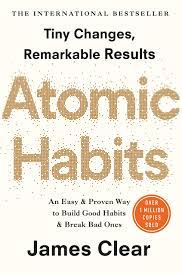
When I first started looking at productivity in more detail, and looking for books to read (or in my case listen to), the one that kept on popping up was Atomic habits by James Clear. So I downloaded it on my phone, plugged in my headphones and picked up my pencil to make some notes.
Atomic habits is all about making lots of tiny (or atomic!) changes to your habits that count towards giving us a 1% improvement every day, which compounds to make a huge change over the course of a year. Not only do the small successes add up, but cutting out the small bad habits also has a real impact in making improvements. Small breakthroughs may happen on one single occasion, but we need to keep repeating these to ensure that they become reliable and consistent.
I found it really interesting to see James’ thoughts on identity. Rather than just changing habits that you want to, think of how these habits affect your identity; or more importantly, the identity that you aspire to. I spent a lot of time thinking about the person I wanted to become, and the habits that I wanted to form (or inversely break) to reinforce my aspirational identity.
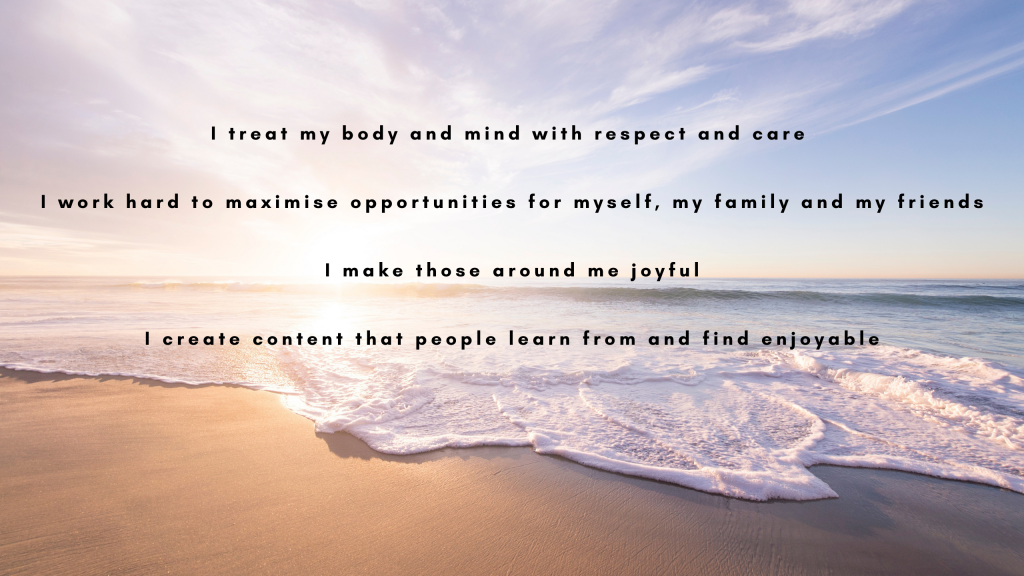
It’s a tiny bit (read very!!) scary, but below are the four key parts of my identity that I try to focus on everyday. The outcomes of my journal are marked against these, my habits try to reinforce these, and generally everything I do has the below in mind.
There are four stages to forming habit, and it’s worth pointing out that is a process, they are not independent of one another.
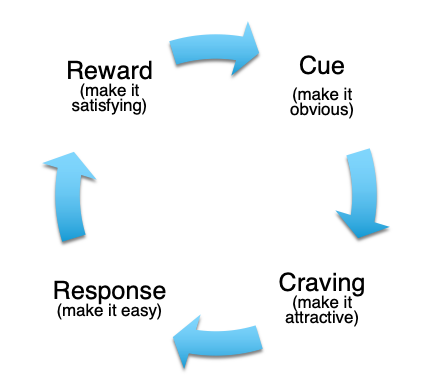
So the first stage is a cue. This could be emotional, physical, time or space related, but the cue kick starts the habit. For instance, when my alarm goes off in the morning, I trying to form the habit that I check my emails and straight away complete my daily to do list.
The key to forming a new habit is to make the cue obvious, not something subtle that you can miss. So for instance, it may be something as simple as when I pour my morning coffee, I take my morning vitamins. Make the cue specific, and give it a location and time. So developing this, your cue could be ‘I will take my daily vitamins in the morning while I’m making my morning coffee in the kitchen.’
Being specific really increases the chance of you picking up on the cue and moving onto the next stage of the habit cycle.
The craving. Now, in some situations, it may be really obvious, and in others it may not. So taking the vitamins example again, this would fit in with my identity that I treat my body and mind with respect and care.
Now in other situations, we may need to be a bit more overt with our craving, and really tempt our body and mind into reacting to the cue. So for instance, it may be that you don’t like the taste of your vitamins, so the craving satisfaction may come from not starting your coffee until you’ve taken your vitamin. Whatever the craving it, we need to make it attractive to ensure that we actually carry out the action fo the habit.
This should then lead to a response, and to make it the response we want, we need to make it easy. So, if we know we’re going tot take our vitamin when we’re making our coffee, there is little point in keeping your vitamins upstairs in the bathroom. Instead, let’s keep it downstairs next to the kettle so we don’t even have to move our feet.
Our habits (and behaviour in general) is always going to take the path of least energy, so why not manufacture your route to actually be the easiest route for you? For instance, stopping at the gym on the way from home is easier if you have to literally drive past it…
Finally, we get a reward, and the better the reward, the more likely we are to repeat the desire response next time. We generally want an instant satisfaction, so why think about how we can make the reward be instantaneous. For instance, change vitamins to one that you like the flavour of.
it may also be that the progress we are making is part of the reward. For instance, Jerry Seinfeld talked about ‘not breaking the chain.’ Essentially, he wrote jokes every day, and that made him a better comedian in the long run. So his reward actually came from the process.
Now conversely, you may be looking to break bad habits, so if that’s the case, let’s do the opposite….
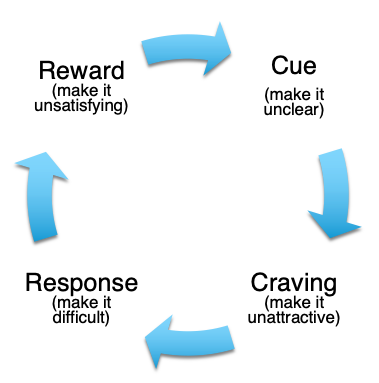
When you look at it like this, it looks so simple doesn’t it?
Now, I’m sure some of you will be thinking, that’s all great, but what is the point in habits? For me, I have tried just as hard to break bad habits as well as forming new good habits. This has allowed me to increase my productivity by cutting some bad habits out of my schedule, but also by automating a number of the processes and tasks I have to get through in a day.
Again, these good habits are used to enforce my identity, and the bad habits that I’m trying to cut out are the ones that contradict my identity. This has really helped me make progress on a daily basis. It may only be 1% each day, but that is more than good enough for me.
I would definitely recommend reading this book to help create your own identity, and either form the good habits or get rid of the bad habits so you can be the person you aspire to be.
If you want to check out the book, then click on the link below*
Atomic Habits: The life-changing million copy bestseller* this is an affiliate link that I may get a kickback from if you do purchase, but it won’t cost you any more! Thanks


Pingback: My 3Es - Mark Rance
Pingback: How keeping a journal boosted my self awareness - Mark Rance
Pingback: How to build a successful side hustle - Mark Rance
Pingback: Weekly Quote Drop #6 - Mark Rance